The King's Birthday
Celebrating King George III's Birthday in 1772
Garrison Orders
June 3, 1772
Tomorrow being his Majts. Birthday, the Garrison are to be under arms at 12 O'Clock When the Artillery are to fier a Royal Salute Which will be fold [followed] by three Vlooes [volleys] from the Royal Americans who ar to be very Clean well drest and Powderd, and to be redy to turn out at the beating of the long Roll at 10 O'Clock. No Men to be absent. All the Windows in the Fort to be open'd during the fiering.
Niagara, 4 June 1772
Parole: God bless the King
Countersign: Long May he Reign

On October 31, 1776, Lt. Colonel John Caldwell died at Fort Niagara. Caldwell was a younger son of British aristocracy. His father was Sir John Caldwell, Third Irish Baronet Caldwell of Castle Caldwell on the banks of Lough Erne in County Fermanagh, Northern Ireland. Lt. Colonel Caldwell was born about 1725 and pursued a career in the British Army. In 1755, he was commissioned Captain in the 7 th Regiment of Foot and served on Gibraltar during the Seven Years War. From 1765 he was stationed at Fort George, Scotland (northeast of Inverness) and reached the rank of major in 1766. Caldwell purchased the Lieutenant Colonelcy of the 8 th Regiment of Foot in 1772. On August 7, 1774, he took command of Fort Niagara. On his arrival here, he found a dilapidated fort in dire need of repair. Caldwell’s myriad duties included representing the Crown in dealings with the Haudenosaunee and other Native nations, putting the Fort in a defensible condition, overseeing naval operations on Lakes Ontario and Erie, ensuring an adequate flow of supplies and gathering intelligence for General Thomas Gage, British commander-in-chief in North America. After the American Revolution broke out in April 1775, General Gage wrote to Caldwell, “I would have you immediately cultivate the friendship of the Indians as much as possible.” With no background in Native diplomacy, Caldwell did remarkably well in this regard. Between November 1775 and June 1776, American forces invaded Canada and blocked supply lines to Fort Niagara. This placed the Fort’s garrison in a crisis as the Fort’s logistical lifeline was severed. Supplies and materials were in short supply and rations for the troops had to be cut. Caldwell described the garrison as in a “starving condition.” American occupation of the St. Lawrence also cut Caldwell off from communications with his superior officer, Governor Guy Carleton. Caldwell was left to manage his numerous responsibilities according to his own devices. With Ethan Allen’s May 10, 1775 seizure of Fort Ticonderoga fresh in his mind, Caldwell also had to worry about a similar surprise attack on Fort Niagara. He worked tirelessly with scant resources to repair the Fort and strengthen its defenses. All these factors and the harsh conditions at the Fort weighed heavily on the 51-year-old commandant. In August 1776, he was not in the best of health and by October Caldwell reported to Carleton about his “ill state of health.” He died on October 31 much lamented by Haudenosaunee friends. Historian Paul Stevens, author of Old Fort Niagara’s A King’s Colonel at Niagara, noted that two Haudenosaunee chiefs gathered at the door to his room to bid him farewell. They reportedly said, “let us but touch him before he dies and we will be contented.” David Murphy, lecturer in military history and strategic studies at Maynooth University, indicated that the chiefs asked to sit with him on his deathbed. Caldwell’s funeral took place on November 1, 1776. The place of his interment is unknown but was probably under the floor of the Fort’s freestanding chapel (where the three flagpoles stand today). In mid-November, Captain Richard Lernoult came from Detroit to temporarily take command of Fort Niagara. Ultimately command of the Fort passed to Lt. Colonel Mason Bolton who perished in the wreck of the HMS Ontario on October 31, 1780. A strange coincidence, one might observe.
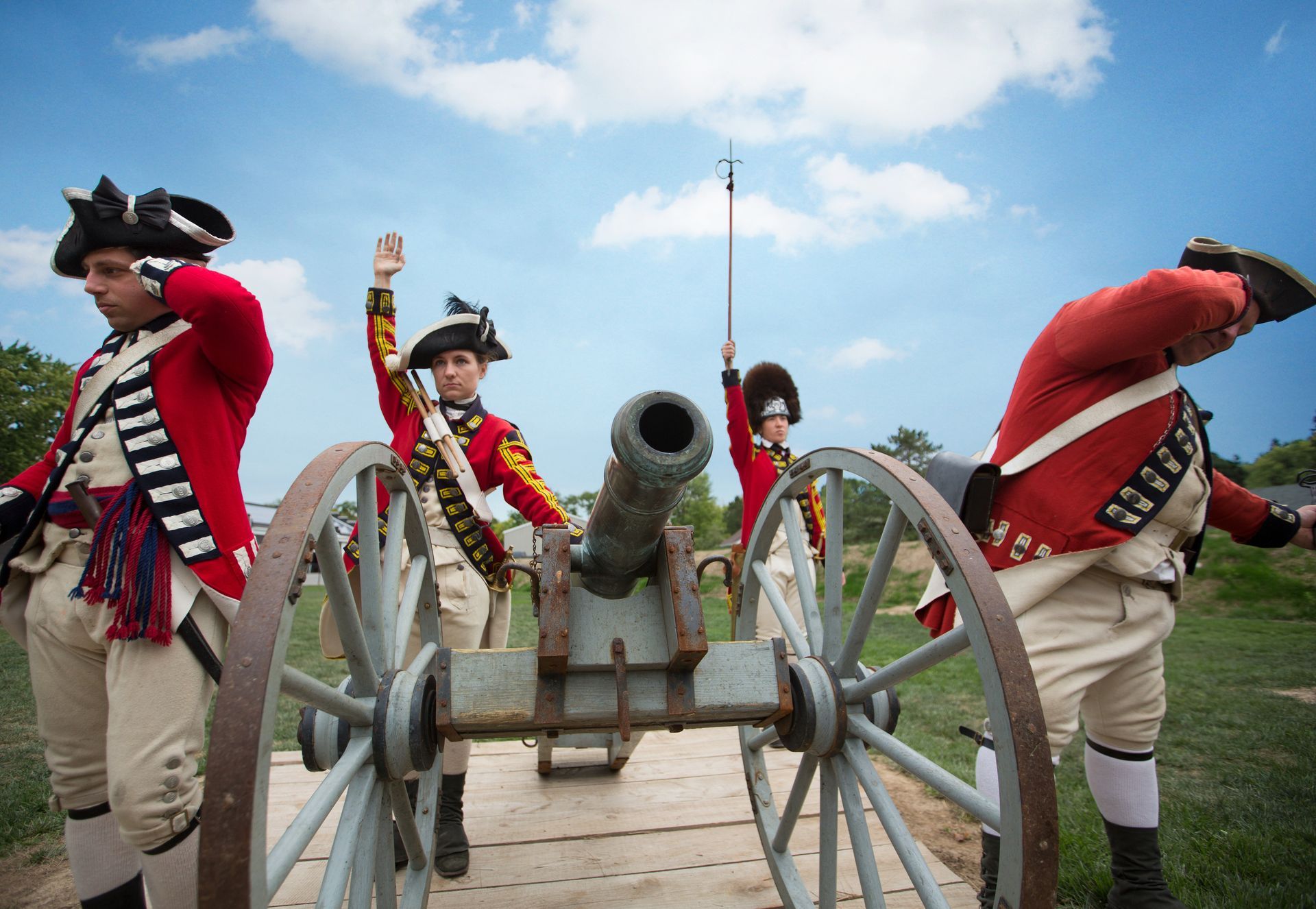
1776 is best remembered as the year the thirteen colonies declared their independence from Great Britain. This dramatic event occurred fifteen months after combat between Massachusetts militia and British regulars broke out at Lexington and Concord in April 1775. American forces besieged Boston and forced the British to evacuate the town in March 1776. Until the British returned to capture New York City in the late summer and fall of 1776, Fort Niagara in western New York temporarily became one of the few British-occupied posts in what is now the United States. Situated far from the theater of combat in 1776, western New York still played an important role in the American Revolution. Located at the mouth of the Niagara River, Fort Niagara was held by the British throughout the Revolution. Originally built by the French in 1726, the Fort was captured by British and New York Provincial forces in 1759, during the French and Indian War. The Fort served as British headquarters on the Great Lakes and would play an important role in the frontier war that raged from New York to Kentucky between 1777 and 1783. Fort Niagara guarded the strategic Niagara Portage, a road that bypassed Niagara Falls and linked the Lower Niagara River with the Upper Landing above the Falls. Prior to the opening of the Erie Canal in 1825, the Niagara Portage was a vital artery for travel and trade between Lake Ontario and Lake Erie. For the British military, the portage was critical in moving troops and supplies to upper posts like Detroit and Michilimackinac. As British headquarters on the Great Lakes, the Fort boasted the largest concentration of British soldiers in the region. At the beginning of the Revolution, the garrison consisted of four companies of the 8 th Regiment of Foot. Including officers, non-commissioned officers, musicians and private soldiers, troop strength at Fort Niagara stood at about 188 men. Other companies of the 8 th Regiment garrisoned Oswegatchie (Ogdensburg, NY), Detroit and Michilimackinac. Once the war broke out, some of Niagara’s soldiers were dispatched to garrison Fort Schlosser, a small post above Niagara Falls that guarded the southern end of the Portage. In 1776, the Fort was commanded by 51-year-old Lt. Colonel John Caldwell, a native of County Fermanagh, Ireland. Caldwell was a career soldier who took command of the 8 th Regiment of Foot in 1772. The 8 th was one of the British Army’s most senior regiments, having been formed in 1685. It was designated the “King’s” Regiment by distinguishing itself in combat early in the 18 th century. The Regiment was sent to North America in 1768 garrisoning Quebec, Montreal, and other Canadian outposts. In 1774 the 8 th was sent to the Great Lakes for a two-year tour of duty that would last until 1785. Shortly after arriving at Fort Niagara, Caldwell would write his sister-in-law, Elizabeth, that he was “cast away as I must justly term it upon the most desert part of the Continent.” The dilapidated fort that Caldwell commanded contained some twenty buildings, including six that survive today. In addition to the “large Stone House,” known today as the French Castle, there were two fairly new stone towers, called Redoubts. Other structures included a powder magazine, bake house, and provisions storehouse. Several buildings that no longer exist, included a chapel, blacksmith shop, soldiers’ barracks, guard houses and stables. Perhaps the Colonel’s top priority was maintaining good relations with Indigenous peoples who came to the post to negotiate and trade. This became even more important with the outbreak of the Revolution. Orders from the British Commander-in-Chief, General Thomas Gage, instructed Caldwell to cultivate the friendship of the Haudenosaunee Confederacy and other nations to keep them in the British interest. Caldwell’s diplomatic responsibilities were made easier with the arrival in November 1775 of John Butler, who would serve as Indian Agent and advisor on Indian affairs. The 48-year-old Butler was an ardent Loyalist, a prominent Mohawk Valley resident and an officer in the British Indian Department, a quasi-military organization responsible for Native diplomacy and alliances. Western New York was Seneca territory, but in 1776, there were no major villages close to the Fort. To the east there were multiple villages around the Finger Lakes region and to the south, there were Native settlements on the upper Allegheny River. Perhaps the closest major Native settlement in 1776 was Chenussio, otherwise known as Little Beard’s Town. This village of about 130 houses was located where Cuylerville, New York stands today. The village was described as made up of “finely built log cabins with ample furnishings some even had glass windowpanes.” Even though Native villages stood at least eighty miles from the Fort, the post was often visited by Indigenous peoples from throughout North America. Native people came to trade, to negotiate, to cement alliances and to obtain arms and supplies as allies of the Fort’s occupants. One such council that would greatly influence the course of the American Revolution took place in late August/early September of 1776. Delegates from the Seneca, Cayuga, Onondaga and Mississauga nations traveled to the Fort to negotiate with Caldwell and Butler, who continued their efforts to enlist Indigenous warriors in their cause. At the end of the conference, part of the Haudenosaunee Confederacy declared their allegiance to the British, a major diplomatic success for the Crown. The following year, hundreds of Haudenosaunee warriors took to the field to support British efforts to subdue the rebellion. Devastating raids on the New York and Pennsylvania frontiers continued throughout the rest of the war. In response, General Washington sent an army into the country of the Haudenosaunee in 1779, hoping to drive them from the war. Under the command of Generals John Sullivan and James Clinton, the army cut a swath through Haudenosaunee territory, burning villages and crops and driving refugees to the Niagara Frontier. Now, thousands of refugees crowded around the Fort, setting up camps that stretched for miles along the Niagara River. Hundreds died of starvation and exposure during one of the 18 th century’s harshest winters. Colonel Caldwell would not live to see the turmoil that engulfed the region from 1778-1780. During 1776, his health deteriorated and he passed away on October 31, 1776. Fort Niagara would remain in British hands until 1796 when it was conveyed to the United States under the terms of the Jay Treaty. While not the scene of any major military engagement during the American Revolution, Fort Niagara and Indigenous villages that dotted western and central New York would have a major impact on the war fought over hundreds of miles of the American frontier.
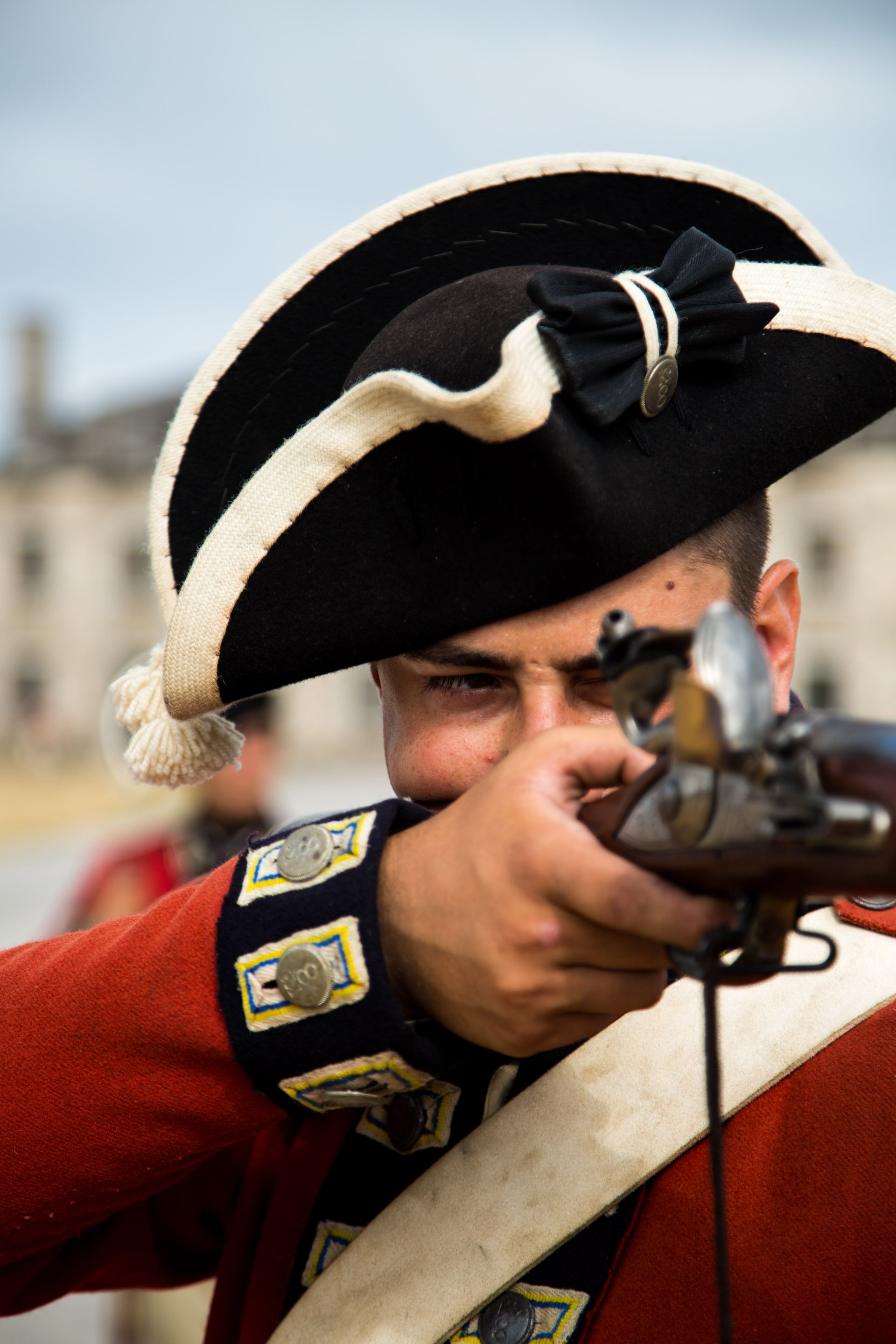
The value of accurate fire was recognized in the 17 th and early 18 th centuries when period drill books recommended at least some target practice for British troops. In peacetime however, parsimonious issues of lead made practice with live ammunition difficult. Historian J. A. Houlding found that the government did not stint on gunpowder and flints but issued only 1 cwt. of shot to each battalion of foot annually. This worked out to about 2 to 4 musket balls per man per year. (Houlding p. 144) Instead of stressing marksmanship, peacetime training focused on the platoon exercise, firing blanks or “squibs.” In 1751 the Lt. Colonel of the 8 th Regiment of Foot stated that he wished the troops, "were accustomed to take aim when they present, No Recruits want it more than ours, few of them having fired or even handled Fire Arms before enlisted; the Explanation of the word “present” in the manual exercise, is very different in my Opinion from what Men shou’d do when firing at an Ennemy, this gives them a Habit of doing it wrong, and I have room to believe that the Fire of our Men is not near so considerable as it would be, were any pains taken to make them good Marks men” (Houlding, p. 280) James Wolfe, speaking of his experiences in Scotland during and after the Jacobite Rebellion of 1745, pointed out the benefits of firing live ammunition in a 1755 letter, "Marks men are no where so necessary as in a mountainous country. Firing ball at objects teaches the soldiers to level incomparably, makes recruits steady and removes the foolish apprehension that seizes young soldiers when they first load their arms with bullets. We fire first singly, then by files, 1, 2, 3 or more, then by ranks, and lastly by platoons, and the soldiers see the effects of the shot, especially at a mark or upon the water. We shot obliquely, and in different situations or ground from heights downward and contrarywise." (Findlay p. 271) It was during wartime that the British soldier got his chance to practice marksmanship. During the French and Indian War, Lord Loudoun issued these orders to the newly raised 60 th Regiment of Foot: "They are then to fire at marks, and in order to qualify them for service of the woods, they are to be taught to load and fire, lyeing on the ground and kneeling." (Houlding p. 375) In the summer of 1757 (the fourth year of the French and Indian War), the Lt. Colonel of the 15 th Foot reported, "We have three field days every week…7 rounds of powder and ball each every man has fired about eighty four rounds, and now load and fire Ball with as much coolness and allacrity in all the different fireings as ever you saw them fire blank powder." (Houlding p. 280) General Jeffery Amherst ordered his army, in winter quarters in New York during the winter of 1758-59, to “practice their men at Firing Ball, so that every soldier may be accustomed to it.” (Houlding p. 366). In the months leading up to the outbreak of the American Revolution the British commander in North America, General Thomas Gage, ordered his Boston-based army to practice marksmanship. Historian Matthew Spring points out that Gage’s men practiced almost every day. Dr. Robert Honeyman witnessed this activity. Honeyman recorded: "I saw a regiment and the body of Marines, each by itself, firing at marks. A target being set up before each company the soldiers of the regiment stepped out singly, took aim and fired, and the firing was kept up in this manner by the whole regiment till they had all fired ten rounds." (Spring p. 81). Captain Frederick MacKenzie, of the 23 rd Regiment of Foot (Royal Welsh Fusiliers) took part in the live firings at Boston: "The regiments are frequently practiced at firing ball at marks. Six rounds per man at each time is usually allotted for this practice. As our regiment is quartered on a wharf which projects into the harbor, and there is very considerable range without any obstruction, we have fixed figures of men as large as life, made of thin boards, on small stages, which are anchored at a proper distance from the end of the wharf, at which the men fire. Objects afloat, which move up and down with the tide, are frequently pointed out for them to fire at, and Premiums are sometimes given for the best shots, by which means some of our men have become excellent Marksmen." (MacKenzie p. 4) General William Howe, who succeeded Gage as Commander in Chief, also advocated the value of aimed fire, "The commanding officers of corps to practice their Recruits and Drafts in firing at marks, and may, when they think it necessary, order the whole out for that purpose." (Howe/Kemble p. 298). Thomas Simes, author of a 1768 military dictionary, suggested that new recruits should be taught to fire “with ball at the target till they can hit the object six times out of twelve, for without firing at a mark, men will not be marksmen; and without being sure to kill, soldiers are not in the best possible state of war.” (Simes p. 177). A decade later Bennett Cuthbertson advised, "When a convenient place can be obtained for fixing up a butt (a barrel), the Companies should perform all the different firings with ball cartridges once a month, it being the true method of training soldiers to the use of arms, and forming them for whatever service they may be called to; and in order to raise an emulation in this essential part of discipline, that Company, which in the course of a day’s performance, drives the greatest number of balls each should be distinguished until the next monthly practice, by a little tuft of scarlet worsted worn above the cockade." (Cuthbertson pp. 171-172). So we see it was customary during wartime for British soldiers to shoot at targets of various sorts to improve marksmanship. Such was also the case at Fort Niagara. Although recorded during peacetime, Captain Glasier’s Orderly Book from the 2 nd Battalion, 60 th Regiment of Foot documents several days of target training at Fort Niagara during March and April 1772. An entry for March 27 orders “Captain Stevenson’s Company to parade Tomorrow afternoon at 3 O’Clock for the Targate firing, all the men that is here of Captain Glasiers Company is to join Captain Stevenson’s.” Four days later Captain Hutcheson’s Company of the same battalion was ordered to parade for target firing. Training proceeded fairly regularly through April 1772. Another reference to shooting at marks comes in 1780 as Fort Niagara’s commandant, Lt. Col. Mason Bolton wrote to Governor Frederick Haldimand, “The Colonel has had his men [Butler’s Rangers] out this spring (or rather winter) frequently firing at marks, &c, &c. agreeable to your Excellency’s orders.” (Haldimand Papers reel 21760 p. 278). One would expect a unit such as Butlers Rangers to stress good marksmanship. However, aimed fire was also frequently practiced by British regulars during the French and Indian War and American Revolution. By demonstrating this for the public, Old Fort Niagara is helping to present a more accurate picture of the activities of British soldiers in America. But don’t worry, we’re only using “squibs.” Readers can learn more about the accuracy of musket fire by visiting YouTube and watching a short video, The Effectiveness of 18 th Century Musketry, on the Old Fort Niagara Association channel. References Cuthbertson, Captain Bennett. A System for the Compleat Interior Management and Economy of a Battalion of Infantry. Dublin: Boulter Grierson, 1776. Findlay, J. T. Wolfe in Scotland in the ’45 and from 1749-1753. London: Longmans, Green and Co., 1928. Haldimand Papers, Reel 21670, p. 278. Honeyman, Dr. Robert. Journal for March and April 1775. San Marino, CA: Henry E. Huntingdon Library. Houlding, J. A. Fit for Service: The Training of the British Army, 1715-95. Oxford: Oxford University Press, 1981. Howe/Kemble.The Kemble Papers1775-1783 v. 1. Collection of the New-York Historical Society. New York: New York Historical Society, 1883. Mackenzie, Frederick. The diary of Frederick MacKenzie. 2 vols. Cambridge Mass: Harvard university Press, 1930. Simes, Thomas. A Military Medley. London: Printed for the Author, 1777 Spring, Matthew H. With Zeal and with Bayonets Only: The British Army on Campaign in North America, 1775-1782. Norman: University of Oklahoma Press, 2008. Tully, Mark. The Packet II. Baraboo WI: Ballindalloch Press, 2000.
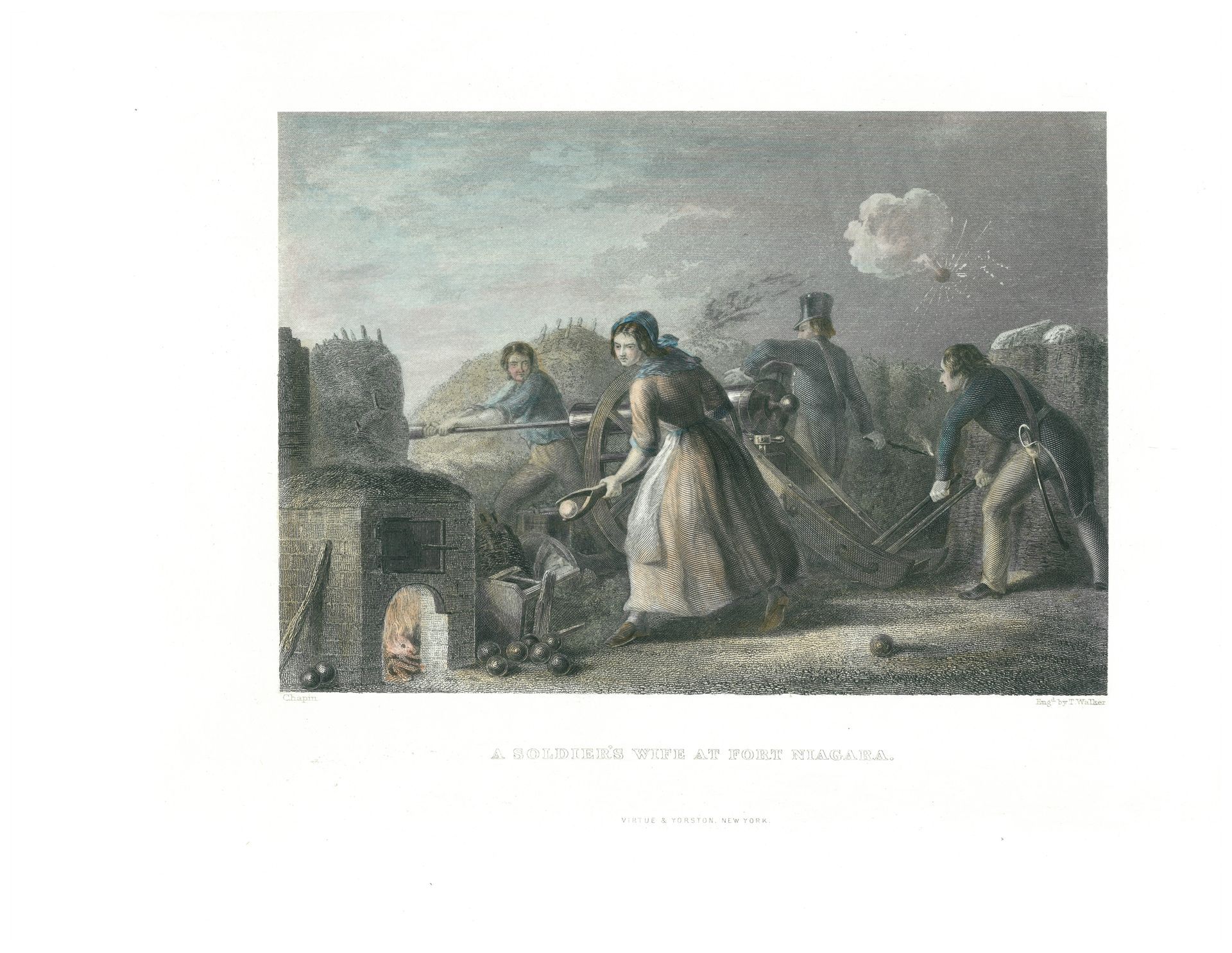
Betsy Doyle: Myth or Matross? Early American history offers a range of heroines from spies to secret soldiers, yet many of their stories are poorly documented or richly embellished. Historians still debate the existence of Monmouth Courthouse’s Molly Pitcher and the motives of Manhattan’s Mrs. Murray. Until recently, another heroine, New York State’s own Betsy Doyle, remained an elusive figure from the War of 1812. According to 19 th century popular historians, Betsy or “Fanny” Doyle bravely served a cannon on the roof of Fort Niagara’s French Castle during a violent and prolonged artillery duel with British-held Fort George. Betsy reportedly carried red-hot cannonballs to a gun on the Castle’s roof, where they were immediately dispatched toward the wooden (and combustible) British stronghold. Over the years, Betsy’s legend grew, based upon an isolated account by Fort Niagara’s Colonel George McFeely that compared her actions to those of Joan of Arc. When Fort Niagara was restored between 1929 and 1934, the Daughters of 1812 placed a commemorative plaque near the site of Betsy’s heroic actions identifying her as “Fanny” Doyle. Recent research reveals that Betsy Doyle was not only a real person, but lived a harsh existence in the years following her famous November 1812 escapade. When Fort Niagara fell to British attackers in December 1813, Betsy narrowly escaped capture. With her children in tow, she fled 310 miles through a New York State winter to the United States Army’s East Greenbush Cantonment, where she fell ill with a fever. Here she remained until her premature death in 1819, brought on perhaps by a lack of pay for her services as a hospital matron.
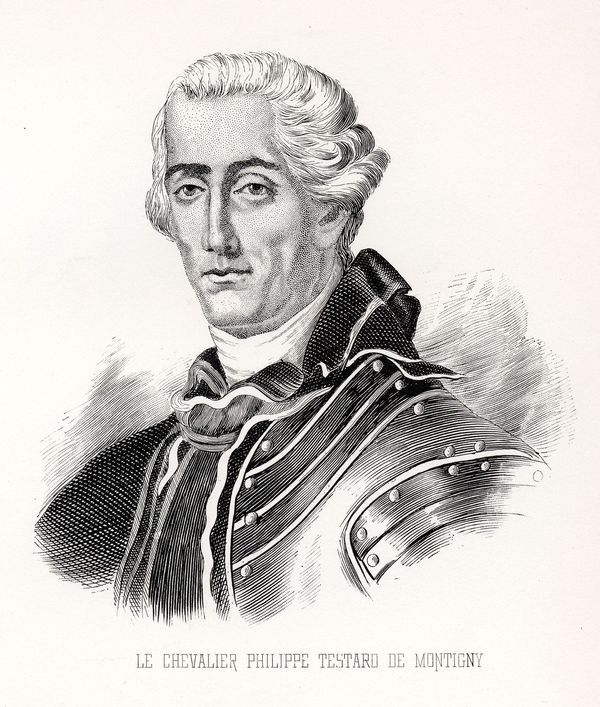
The year 1758 marks the turning point in the French and Indian War. Until that year, there had been few British victories, while the French reaped one triumph after another. Britain’s plan for the 1758 campaign was an overwhelming assault on New France. The main thrust, with an army of 17,000 men, would be made against Fort Carillon (Ticonderoga) on Lake Champlain. Another 15,000-man force would attack Louisbourg, the fortified seaport that guarded the entrance to the St. Lawrence River. A third force of 6,000 men would march over the mountains of Pennsylvania to oust the French from the Forks of the Ohio (Pittsburgh). New France’s meager resources had to be concentrated in these three places to repel Britain’s attacks. Even so there was bitter disagreement between the two leaders charged with the defense of the colony, Governor Vaudreuil and General Montcalm. Vaudreuil conceived a plan to send General Francois Gaston, duc de Levis with 3,500 men from Montreal via Oswego to attack the Mohawk Valley. As British forces neared Ticonderoga however, this plan had to be set aside and the men moved south to bolster Montcalm’s defense of that strategic outpost. This situation left Lake Ontario only lightly defended. A small garrison of about 110 held Fort Frontenac [Kingston, ON] at the eastern end of the Lake and the newly expanded Fort Niagara housed a garrison of only about 40 soldiers. Louis Antoine de Bougainville, aide to General Montcalm commented that Niagara’s small garrison “will not even suffice to line the ramparts of one of the bastions.” [i] There was some justification for weakening the Lake Ontario district in favor of other theaters of war. Since 1756 and the fall of the British post at Oswego, the French enjoyed complete naval superiority on the Lake. Nine warships, some of French construction, others captured from the British, were available to keep the English at bay. During the summer of 1758, at least two of these ships were slated to sail between Forts Frontenac and Niagara carrying goods and supplies and bringing stone to line Niagara’s earthen walls. This situation changed dramatically on August 27 when Col. John Bradstreet, leading an army of about 3,100 British and Provincial soldiers, attacked and captured lightly defended and decrepit Fort Frontenac. In one of the boldest actions of the French and Indian War, Bradstreet’s troops captured or destroyed 60 cannons, 16 mortars, 9 sailing vessels, large quantities of military and naval stores, provisions, and Indian goods valued at 800,000 livres. Captain Thomas Sowers described the spoils of victory as, "Provisions of every species for twenty thousand men for at least Six months. This fort was the grand magazine for supplying the Forts on the Lake to the Southwestward of it as well as those up on the Ohio as far as Fort Duquesne… there was scarce a Military or Naval Store which this Place did not abound with." [ii] On August 30 Governor Vaudreuil learned of Fort Frontenac’s surrender. Troops were rushed to La Presentation [Ogdensburg, NY], a fortified mission that now protected the western flank of the St. Lawrence Valley. Would the British descend the St. Lawrence to attack the heart of New France? Of equal concern was Bradstreet’s seizure of two warships anchored at Frontenac. In just a few days, the naval situation on Lake Ontario had completely changed; the initiative had passed to the British and Fort Niagara stood vulnerable. [iii] Commissary Doreil summed up the fears of many French officials when he wrote "My fears are too well founded… the enemy is master of the post of Frontenac... No precaution was taken with our navy. The English, more careful than we, have burnt it, with the exception of two 20 gun brigs, which they have preserved, the more effectually to exclude us from Lake Ontario... Everything is now to be feared for Fort Niagara, which, indeed, is good, but as bare as Frontenac." [iv] Vaudreuil quickly ordered Captain Jean-Baptiste Testard de Montigny to lead 500 men in 30 canoes across Lake Ontario to Fort Niagara’s relief. If the British warships tried to interfere, Montigny’s instructions were to land and drag his canoes into the woods out of reach of the ships’ guns. Vaudreuil could scarcely have selected a more qualified commander for the mission. The 34-year-old Montigny was an expert in Indian languages and customs, had served on dozens of raids against the British frontiers, and had most recently been employed convoying supplies to Detroit. Montigny was an experienced frontier warrior equally at home in a birchbark canoe, or leading war parties of French and Indians in the woods. He gathered his forces at La Presentation and set off on or about September 11. His journey to Niagara took seven days. [v] Montigny’s arrival at Niagara about September 18 found the small garrison preparing to burn outbuildings and make the best defense they could. Niagara’s commander, Captain Jean-Baptiste Mutigny de Vassan had only learned of Frontenac’s fall a few hours before Montigny’s arrival (the news reached Niagara almost three weeks after it was received in Montreal). No doubt Montigny’s reinforcement was welcome, as was the subsequent arrival of additional convoys bringing much needed supplies. By this time, however, the danger had passed. Bradstreet’s orders did not include an attack on Fort Niagara. He had destroyed seven of the captured warships at Frontenac and had loaded the remaining two with loot from the fort. Once ashore at Oswego, Bradstreet ordered the last two ships destroyed. He returned eastward by bateau, leaving Lake Ontario in the much-weakened hands of the French. Shortly after Bradstreet’s departure from Oswego, the famous French partisan leader Jean-Baptiste Levrault de Langy arrived there and found the captured ships as well as some “barges” destroyed. His report to the Governor on September 18 allayed many fears. Later that year, the New York Gazette reported that, in view of Niagara’s weakness, it was an ‘unlucky thing’ that Bradstreet had not pressed on. It would take another year and another campaign to secure the capture of Fort Niagara. In the meantime, the British had secured two of their objectives for 1758, Louisbourg and Fort Duquesne. France retained Carillon after repulsing British forces in the bloodiest battle yet fought on American soil. As for Niagara, plans were already in preparation to reestablish a navy on Lake Ontario and to strengthen the Fort. It was agreed that Captain Pierre Pouchot should return to Niagara to replace the ineffective and haughty Vassan as commandant. Louis Antoine de Bougainville summed up the situation by writing, “Let us hope that the danger we have escaped will serve as an example to us not to abandon, in the future, a fort which is the key to the country.” [i] See Adventure in the Wilderness, the American Journals of Louis Antoine de Bougainville, 1756-60, translated and edited by Edward P. Hamilton, University of Oklahoma Press, Norman and London, 1964. pp. 283-4 [ii] Sowers to the Commissioners of Ordnance, October 1, 1758 as quoted in Royal Fort Frontenac, Dr. Richard A. Preston, and Trans. Dr. Leopold LaMontagne, ed. Toronto, Champlain Society 1958. pp. 267-8. [iii] The two vessels seized were probably the Marquise de Vaudreuil and the London. The former, mounting 16 guns, was a French schooner, built at Frontenac in 1755. The latter was a brigantine of 18 guns launched by the British at Oswego in 1756. London was captured by the French when Oswego capitulated in August 1756. See Robert Malcolmson, Warships of the Great Lakes, 1754-1834, Naval Institute Press, Annapolis, 2001. [iv] M. Doreil to Marshall de Belle Isle, 31 August, 1758. Documents Relating to the Colonial History of the State of New York, v. X p. 821 [v] See David A. Armour, entry for Testard de Montigny, Jean-Baptiste-Phillipe, Dictionary of Canadian Biography Online www.biographi.ca
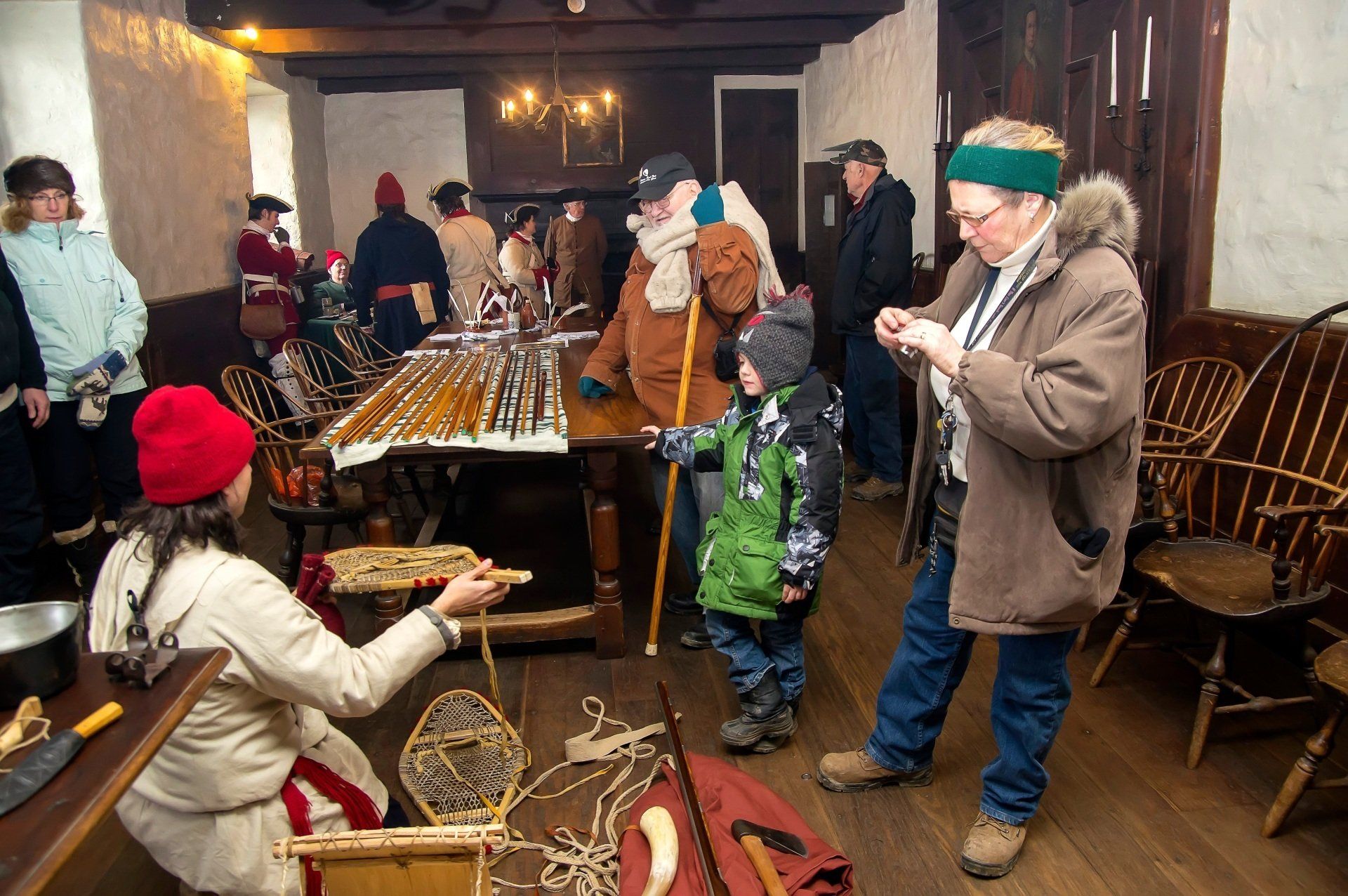
We are grateful to Kevin Gélinas, teacher, author and historian, for providing a copy of documents from the Canadian archives, that shed light on some of the common soldiers and tradesmen at Fort Niagara in 1749. Kevin conducts ongoing research on French Canadian material culture and the fur trade. He is the author of Frontier Soldiers of New France, The French Trade Gun in North America 1662-1759 (Mowbray Publishers, 2011) as well as numerous articles on other common trade goods like axes and knives. Kevin annotated and translated the documents that serve as the basis for this article. It’s rare to get a glimpse of the lives of common soldiers and workers at Fort Niagara, especially during the French period. Several documents dating from 1749 were recently discovered in the Canadian Archives by Kevin Gélinas listing officers, common soldiers and tradesmen at Fort Niagara. The first document presumably dates from the summer of that year, because two commandants are listed; Monsieur de Raymond, Captaine Commandant and Monsieur de Beaujeu, idem commandant. In July, Beaujeu relieved de Raymond, the outgoing commandant, arriving at Fort Niagara on July 5. [i] Several other officers are listed, including Monsieur de la Perriére, lieutenant, Sieur Rouville, ensigne and Sieur de la Chauvignerie, lieutenant. Perhaps the most interesting thing about the document is the list of names of people who performed various tasks at Fort Niagara. Claude Maguille is listed as fourniture de bois (supplier of wood), Phillipe Dufay is pour ramonage de cheminés et nettoyer les armes de l’arsenal (Chimney sweep and cleaner of arms) Simon Panais is listed pour bois de chauffage (for firewood). [ii] Another page (perhaps written later) lists Au père Lajus, récollet aumônier (priest), Sieur Sermit, garde-magasin (storekeeper), Sieur Mollin, commis dans les magasins (clerk), Sieur de la Chauvignerie, interprète au dit fort (interpreter), Sieur Joncaire Chabert, autre interprète au chez les Sauvages Tsonontouans (interpreter among the Senecas). On the third page we read the names Jean Lonpré dit Sansquartier, boulanger (baker), Yves Donné, vacher (cow keeper), Pierre Lamarinne, charretier (cart driver), Jean-Baptiste Saclé dit la lime, forgeron (blacksmith) and Jean LaForge, autre forgeron employé ches les Tsanontouans (another blacksmith employed to complete work for the Senecas). The diverse number of people at the Fort continues with Pierre Charlan listed as tonnelier (barrel maker) Jean-Baptiste Charlan, second tonnelier (barrel maker), Marie Danis, ménagère (house keeper), Pierre Picard, cannonier (artillerist), Poitevin, infirmier (nurse), L’Espérance, ramoneur (chimney sweeper), Jean Chabot, charpentier (carpenter), Barthelemy Routaye, autre charpentier (another carpenter) and André Belle Isle, idem (carpenter). [iii] Captain Beaujeu’s assessment of the quality of soldiers and workers at Fort Niagara was not very high. Shortly after his arrival he wrote to Governor of New France de la Galissonniere that the garrison was “much given to drunkenness.” [iv] He found the Fort in poor condition and commented that “ I do not have a man capable of making a peg. I would be satisfied merely with men who know how to handle an axe. So, I cannot thus repair anything”… Beaujeu asked for good soldiers who were cabinetmakers, wheelwrights, masons, mowers and carpenters commenting that “these sorts of men, serving in good will, look to earn money.” [v] While on the surface, just a list of names and trades, these lists provide us with a fascinating glimpse of everyday life at Fort Niagara in the middle of the eighteenth century. [i] Beaujeu to de la Galissonniere, July 7, 1749, Le Bulletin des Recherches Historique v. XXXVII pp. 355-359. [ii] Library and Archives Canada: MG1-C11A, Volume 116 Folder 309v. [iii] Ibid. Folder 314v-315. [iv] Beaujeu to Galissonniere, July 7, 1749, , Le Bulletin des Recherches Historique v. XXXVII pp. 355-359. [v] Beaujeu to Galissonniere, August 23, 1749, , Le Bulletin des Recherches Historique v. XXXVII pp. 362-366.
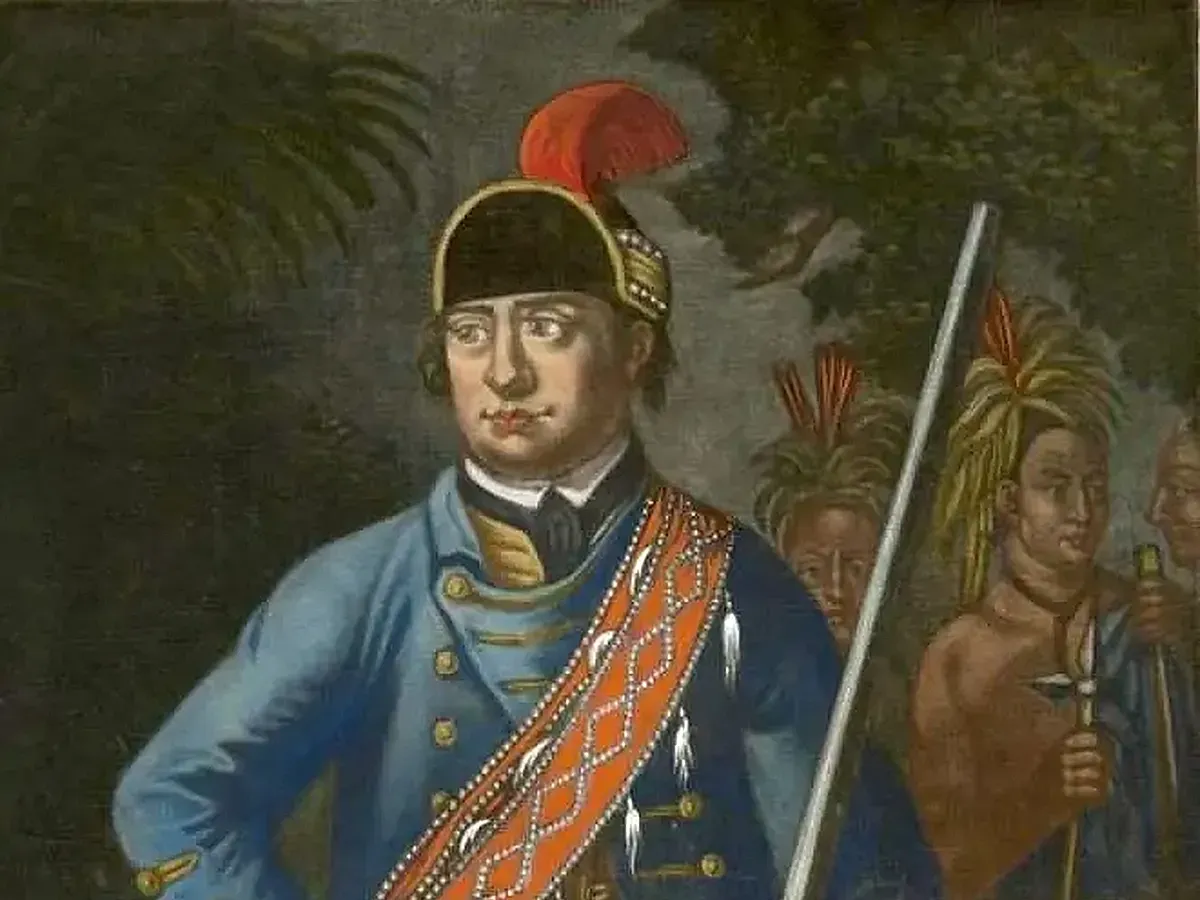
Two-hundred-and-fifty-seven years ago, Fort Niagara received a famous visitor. Major Robert Rogers, a hero of the French and Indian War, arrived at the fort on June 29, 1768. Rogers had been arrested at Fort Michilimackinac the previous December and was now on his way to Montreal to be tried for treason, disobedience of orders and “lavishing away money amongst the savages.” Rogers had served as commandant at Michilimackinac since August 1766. During his tenure he loosened restrictions on the fur trade, sought the illusive Northwest Passage and hosted a grand peace council between the Sioux and Ojibwa. He also submitted a proposal to establish a civil government at the post that reported directly to the King. Over the course of his career, Rogers made some powerful enemies; among them were Sir William Johnson, Superintendent for Indian Affairs for the Northern Colonies and General Thomas Gage, British Commander-in-Chief in America. He had also alienated his secretary, Nathaniel Potter and Michilimackinac’s Indian Department Commissary, Benjamin Roberts. Potter and Roberts, neither of whom had much credibility, claimed that Rogers intended to defect to the French. Johnson and Gage, who were ill-disposed toward Rogers in the first place, chose to believe the accusations. Gage sent orders to Rogers’ second at Michilimackinac, Captain-Lieutenant Frederick Spiesmaker, to arrest him. Spiesmaker ordered Rogers into close confinement for five months and then sent him east for trial on May 21, 1768. When Rogers arrived at Niagara, he petitioned the fort’s commandant, Captain John Brown (60 th Regiment of Foot) to remove the painful leg irons he had worn since being confined at Michilimackinac. Rogers complained that the heavy irons put him in “extreme torture” rendering him lame in one leg. The irons had done so much damage, Rogers feared, “that he never will have the perfect use of his legs again.” [i] Brown ordered the post surgeon to examine Rogers and complied with Rogers’ request “least it might prejudice his health.” [ii] Brown also saw to it that Rogers had candles and supplies from a local sutler. [iii] In spite of these kindnesses, Brown was under strict orders from Gage to carefully guard the wily woods warrior while he was at Fort Niagara. Tradition has it that Rogers was lodged in the narrow center room on the second floor of the French Castle. Brown’s report to Gage only indicated that he “had a strong door and window shutters in proportion fix’d in a Room of the Stone House where there is not a fireplace, where he is lodged.” [iv] Brown ordered a sentry be posted “continually at his Door, and the same never to be opened but in the presence of a Commissioned Officer of the Sergt Major and a file of men at the door.” [v] While at Niagara, Rogers began organizing his defense. He petitioned General Gage to appoint officers to the court martial who had seen frontier service. He also lashed out at his Michilimackinac captors. He accused Captain-Lieutenant Spiesmaker of “inhumane treatment..by..keeping him four days without provisions and loading him with irons of an unlawful weight.” According to Rogers, Spiesmaker threatened to lash him to the fort’s flagpole and have him shot to death. He also accused Lieutenant John Christie of “abusive and ungentleman like language…by telling the memorialist deserved to have his tongue cut out and a Gag of iron put in his mouth, and to be chained to the floor like a dog.” [vi] He also requested Spiesmaker to send down defense witnesses and his papers. In this the Captain-Lieutenant did not fully comply. Rogers arrived at Montreal on July 17 and his trial lasted 12 days. After careful deliberation, the board of officers acquitted him of all charges. He had been arrested on the flimsiest of evidence and his accusers did everything they could to obstruct his defense. In spite of the not guilty verdict, General Gage did not grant Rogers his full freedom until almost a year later. Gage also refused to pay Rogers’ bona fide expenses while serving the Crown. This, combined with unreimbursed debts incurred during his wartime service and some risky borrowing, landed the major in debtor’s prison in 1772. Rogers had been accused of serious crimes, was jailed, tried and acquitted. Even so, his reputation was seriously damaged. The New York Mercury printed a letter from Niagara noting Rogers’ arrival at the fort and commenting that the major was believed to be “a great rascal.” [i] Gage Papers v. 79 Memorial of Major Robert Rogers, July 8, 1768. [ii] Ibid [iii] The question arises why Brown treated Rogers more kindly than his fellow officers. There is no conclusive evidence that the two had previously met, but it is true that men who had served with Rogers in the field were loyal to him. Rogers and Brown did share a common enemy- Commissary Benjamin Roberts. Roberts was described by historians as “difficult and arrogant,” and he certainly was a thorn in Captain Brown’s side when Brown served as Fort Niagara’s commandant. [iv] Gage Papers v. 78, Brown to Gage, July 1, 1768 [v] Ibid [vi] Gage Papers v. 79 Memorial of Major Robert Rogers, July 8, 1768.
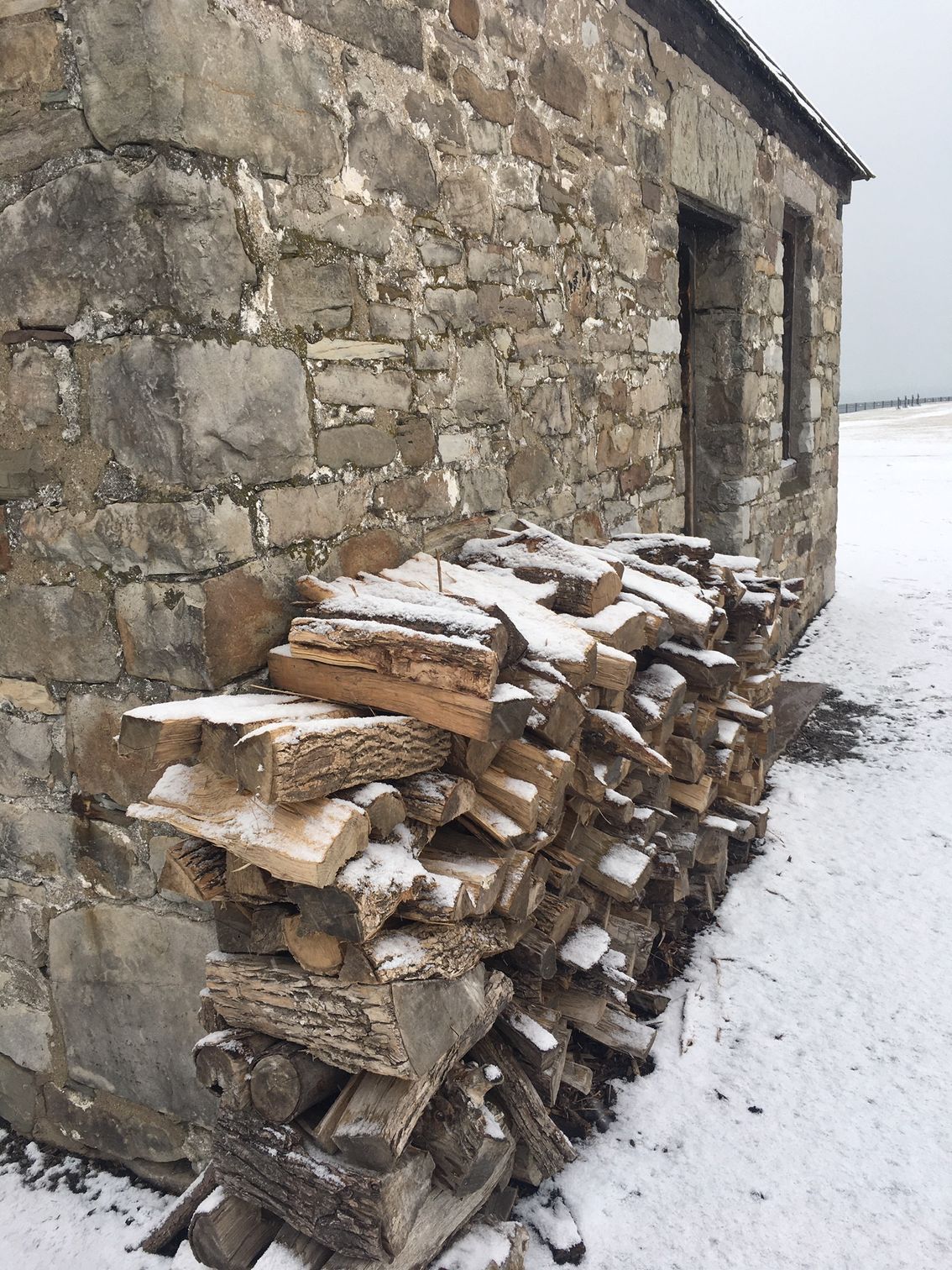
Winter will soon be upon us and our thoughts will turn from travel and outdoor activities to hearth and home. Today most of us take central heating and a comfortable indoor temperature for granted. A flick of the thermostat is all that’s needed to keep warm during even the coldest days of winter. Such was not the case in early America when most depended on fireplaces, warm clothing and bedding to keep warm during the winter months. According to the Farmers’ Museum in Cooperstown, the average New York farmstead consumed about 40 cords of wood in a year. This is the equivalent of about one acre of wooded land. Translating the BTUs produced by this much wood into the cost of modern heating oil yields a heating bill of around $17,000 a year. [i] Woodcutting on the farm was the responsibility of men and boys, who spent long hard days in the woods harvesting trees for fuel. The best time to cut firewood was in the winter months when snow on the ground allowed relatively easy transport by sleigh from woodlot to dooryard . Winter was also the time when farmers had the time to lay in a store of firewood for the following year. This timetable allowed the wood to dry and season before it was needed. [ii] While cutting wood was best done during December, January and February, the arduous task of splitting and stacking was a year-round occupation. Providing firewood for a frontier military garrison intensified the challenges facing farmers. Even a reduced garrison of 30 to 40 men required a great deal of firewood for heating, cooking, baking, laundry, cleaning and hygiene. Ancillary activities like charcoal manufacture and lime burning also consumed large amounts of wood. When Captain Daniel Hyacinthe Lienard de Beaujeu assumed command of Fort Niagara in July of 1749, he lamented to New France’s Governor, Roland-Michel Barrin de La Galissonière, “There are here no more than 50 cords of wood of the 1,200 which are consumed annually.” [iii] That means, by Beaujeu’s estimate, the Fort consumed about 30 acres of trees each year when its footprint was still relatively small. After the British captured the Fort, Major William Walters of the 60 th Regiment of Foot wrote to General Amherst “I keep the Troops constantly employed of fetching wood for the Garrison on sleighs which is good Exercise and adds greatly to their Health , as long as the frost and snow continues.” [iv] Walters continued to gather firewood through the year, writing in August 1762 that he had issued orders “… to have the garrison … supplied with wood … ” [v] By November of 1762 General Amherst wrote to Major John Wilkins, who had replaced Walters as commandant: Before I received your letter, Lt. Col. Eyre had shown me a copy of Lt. Demler’s report which satisfied me that the troops at Niagara had been usefully employed during the summer; but I am now to express my particular approbation of the measures which I see you had taken to preserve the health of your garrison by establishing a brewery whereby the men should be supplied with spruce beer at the easy rate of one copper a quart; and likewise of the precautions to lay in a stock of firewood, and the regulations you had made for each Mess being supplied with plenty of vegetables from their own gardens, all which must make the men live comfortably during the winter and consequently be the more fit for service when the weather will permit their being employed. [vi] Five years later, in 1767, we find another reference to firewood in a letter from Captain Alexander Grant of the Naval Department to Booty Graves at Niagara: You are hereby ordered and directed to take on you the command and direction of the Naval Department at Niagara, taking care to follow all orders and directions that you shall receive from time to time from Captain Brown, the commanding officer at Niagara, or myself; & all officers and seamen of the above Department are to obey you as such... firewood must be procured for Mr. McTavish in his room all winter…. You’ll always have sufficient of firewood for the people ... [vii] One of the difficulties in gathering wood resulted from the long-term military occupation of the site. Defense considerations meant that no trees stood close to the Fort. With the garrison’s voracious appetite for firewood, supplies quickly moved ever farther from the Fort’s walls. One solution to this problem was to use watercraft to move wood. On November 2, 1774 Fort Niagara’s new commandant, Lt. Col. John Caldwell, wrote to General Gage, asking for bateau to move wood from sources along the Lake Ontario shore: I must observe that the scow when built will be so unwieldy and draw so much water that she can only be made use of on the river, for one Gale of Wind upon the Lake (from the shores of which we get our best and nearest wood) would infallibly destroy her. [viii] Harvesting firewood could also be dangerous. In January 1814, shortly after they captured Fort Niagara from the United States, British troops left the Fort on a mission to gather firewood. After covering only about one-half mile of ground, the woodcutting party was attacked by American troops, suffering several casualties. American Major General Amos Hall reported to New York Governor Tompkins on January 13, 1814: On the 8 th inst. a detachment under the Command of General John Swift (a volunteer) and Lieut. Colonel C. Hopkins, with about 70 men, surprised a party of the British who were procuring wood about half a mile from the Fort, fired upon them, killed four of the enemy, lost one of their own men, and took eight prisoners, subsequent to which a large force of the enemy was observed to be in motion, which induced our troops on that station to fall back 4 or 5 miles to a more defensible position. The affair ended here and all is quiet . [ix] A British account of the same incident appeared in a letter from Lt. General Gordon Drummond to Sir George Prevost: I am concerned to report to Your Excellency a circumstance of an unpleasant nature which occurred at Fort Niagara which..may be principally attributed to the want of exertion, or…to the neglect of the commissariat in not throwing a supply of that indispensably necessary article, fuel, into that place. A party was sent out on the morning of the 9 th to cut wood, under protection of a sergeant’s covering party, was attacked by a body of the enemy, reported to consist of about 150 men, and driven in. The sergeant was severely wounded and nine men of the working party, is supposed, taken prisoners…it appears very extraordinary that any individuals of so small a fatigue party should not have been able to affect their escape, and particularly as it appears they were not furnished with arms to assist the covering party in repelling the attack or in effecting a slow and cautious retreat. [x] Thus gathering firewood could be a mundane, arduous and even dangerous task, but one that was never far from the minds of Fort Niagara’s winter garrisons. [i] The Farmers’ Museum: Cutting Firewood: Preparing for Winter, Part 2. http://thefarmersmuseum.blogspot.com/2010/cutting-firewood-preparing-for-winter.html . Fireplaces were only about 10% efficient, with most of the heat going up the chimney. Stoves came into use during the 18 th century but for most, the fireplace was still the most common form of heating. Peter Kalm, visiting New France in 1749 noted stoves in use, including military installations in Quebec. [ii] See Nylander, Jane C. Our Own Snug Fireside: Images of the New England Home 1760-1860. 1993 Alfred Knopf, NY pp. 82-84. [iii] Beaujeu to de la Galissoniere, July 7, 1749. [iv] Walters to Amherst. Feb 2. 1761 Amherst Papers v. 21 [v] Walters to Amherst. Aug. 19, 1762 Amherst Papers v. 22 [vi] Amherst to Wilkins, November 28, 1762, Amherst Papers [vii] Grant to Graves, Oct 23, 1767 Haldimand Papers 21678. McTavish was Simon McTavish, possibly a clerk for the Naval Department at Niagara. [viii] Caldwell to Gage, November 2, 1774, Gage Papers, v. 124. [ix] Major General Hall to Governor Tompkins, January 13, 1814. Documentary History of the Campaigns Upon the Niagara Frontier 1812-1814. Lundy’s Lane Historical Society, Lt. Col. E. Cruikshank, ed. v. IX p. 111. General John Swift had an interesting military career. He was born in Connecticut in 1761 and served as a private in Elmore’s Regiment during the American Revolution. Following the Revolution, he founded the town of Palmyra, NY. He reentered service at the outbreak of the War of 1812. After leading the attack on the woodcutting party outside Fort Niagara, he took part in the 1814 campaign in Canada and was killed near Fort George July 12, 1814 [x] Ibid, p. 131.
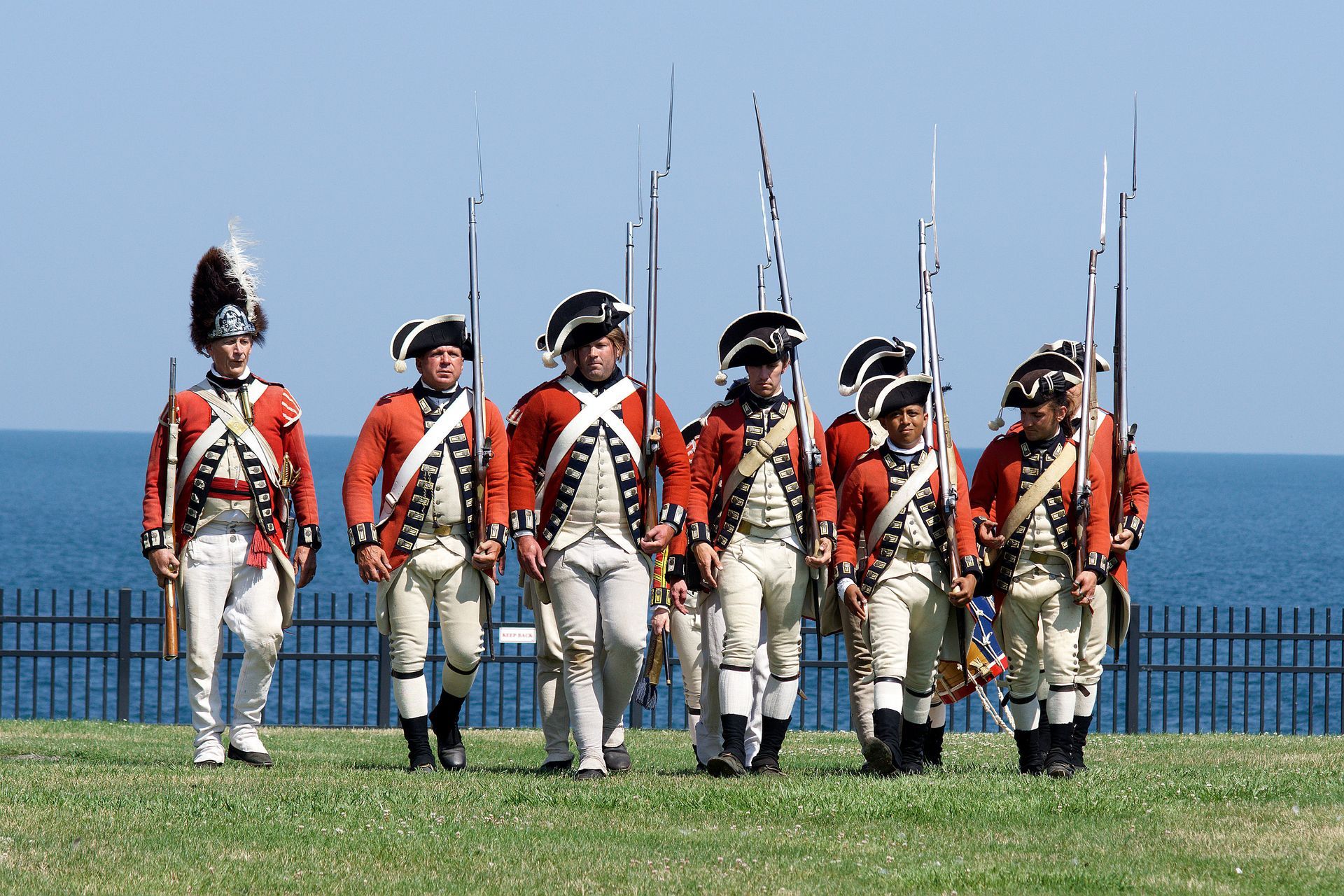
As America approaches its 250 th birthday in 2026, attention turns toward the era of the American Revolution and the founding of the United States. New York State has created a 250 th Commemoration Commission https://www.nysm.nysed.gov/revolutionaryny250 that has identified the period of 2024 to 2033 as the era of commemoration. Locally, the Niagara County Legislature has created a Niagara County USA 250 Committee whose mission is to garner interest in Niagara County’s history among county residents, to strengthen Niagara County’s status as a heritage tourism destination, to foster stewardship of historic and cultural resources in the county and to build community pride among a diverse population. As the era of commemoration begins, we look back at the year 1774, the year before the outbreak of the American Revolution. While open combat did not occur until 1775, many historians consider 1774 to be the year the Revolution began “in the hearts and minds of the people.” Important events of the year include passage of the Coercive Acts (to punish Boston for the Boston Tea Party), the Quebec Act ( which expanded the province of Quebec’s territory to include much of what is now southern Ontario, Illinois, Indiana, Michigan, Ohio, Wisconsin, and parts of Minnesota), and the meeting of the First Continental Congress in Philadelphia. Although Fort Niagara was far removed from most of these events, 1774 was also an eventful year for the fort. On August 7, 1774, His Majesty’s Eighth (King’s) Regiment of Foot relieved the Tenth Regiment as the garrison of Fort Niagara. This marked the beginning of a long association of the Eighth with the post, the Niagara Frontier and the Great Lakes region. It would be eleven years before the Eighth would be relieved and sent home to England. The Eighth Regiment thereby became Fort Niagara’s longest serving British infantry unit. The Regiment had been in North America since 1768, garrisoning Quebec and other lesser posts in the St. Lawrence Valley. Early in 1774, the Eighth was ordered to prepare to move up the St. Lawrence to take over British posts in the upper country. The regiment moved southwestward in two divisions, sailing in bateaus full of officers, men, women, children and baggage. The lead division, destined to garrison the posts farthest away, left Lachine, just west of Montreal, the third week of May. Three companies would garrison Detroit and two would occupy Fort Michilimackinac. The second division, under the regiment’s commander, Lt. Col. John Caldwell, embarked in early June. On June 17, the second division reached Oswegatchie, where the regiment’s light infantry company would be posted. Delayed by contrary winds, the remainder of the second division did not reach Niagara until the first week in August. Lt. Colonel Caldwell took command of the fort on August 7, relieving the Tenth Regiment of Foot, a unit that had served at the fort since 1772. With Caldwell were the four remaining companies of the regiment, about 200 soldiers. Half a company would be dispatched to garrison Fort Erie, leaving a force of only 3 ½ companies to man Niagara’s massive yet deteriorating defenses. Yet, not all was quiet on the western front. As the Eighth moved west, hostilities broke out between Virginia frontiersmen and Shawnee and Mingo warriors in the Ohio Valley. This bloody frontier conflict, known as Lord Dunmore’s War lasted until October 1774. In July, while trying to ameliorate the situation, Sir William Johnson suddenly died, leaving a huge void in British/Native diplomatic relations. (Learn more about Dunmore’s War at https://www.youtube.com/watch?v=psJ1Hgybfec ) British officials were concerned that the warring nations would enlist the support of the Haudenosaunee. Lt. Colonel Caldwell gathered intelligence from local traders and friendly Seneca. He reported to his superior, General Thomas Gage that he had “spared neither trouble nor expense to find out the part the Six Nations were likely to take in these disputes.” Caldwell convened many meetings with local Senecas trying to impress them with British strength. He told them he “was sent to Niagara in the character of Sachem as well as warrior.” If the Six Nations remained quiet, the British would remain their friends, if not, consequences would be severe. In the end, the Six Nations refused the hatchet and remained at peace. The Eighth reached Fort Niagara during the final year of peace before the Battles of Lexington and Concord set the American Revolution in motion in April 1775. At first, most of the soldiers’ time would be taken up by the normal routine of maintaining a decaying frontier fortress. Caldwell and his troops had many tasks to perform to maintain their buildings and walls and to provide firewood and supplies for the garrison. The outbreak of war, however, meant that the regiment would soon have a much more active military role.
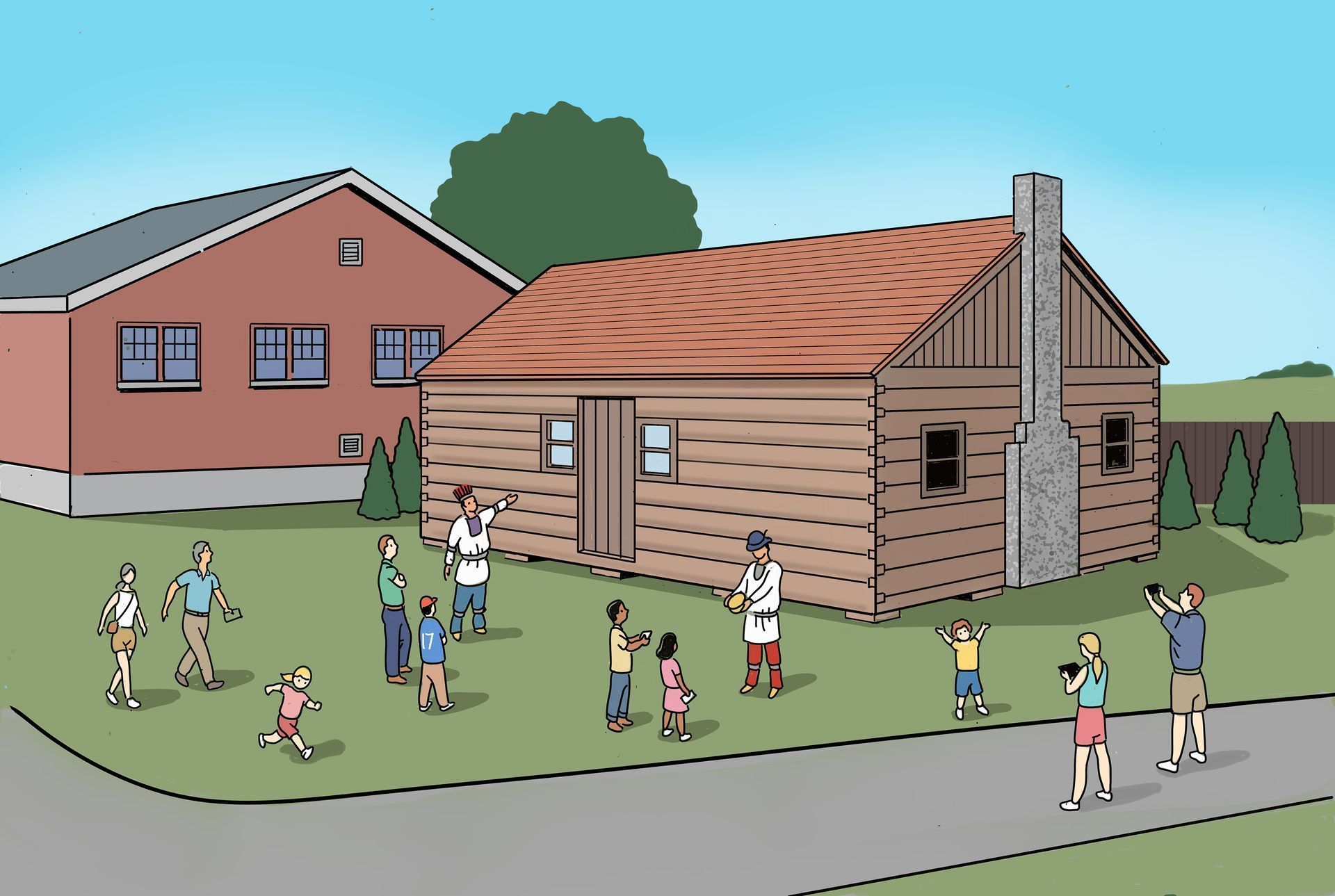
Old Fort Niagara Launches Campaign for Native American Education Center Old Fort Niagara has always stood as a place where stories converge—military triumphs, global conflicts, and enduring alliances. But some of the most powerful stories are those that haven’t always been told in full. Today, we’re taking a big step to change that. As part of our efforts to commemorate the upcoming 250th anniversary of the American Revolution, we’re proud to announce the creation of a Native American Education Center —a new space that honors the deep and ongoing connection between Old Fort Niagara and the region’s Indigenous nations. This hewn-log structure, modeled after 18th-century Native dwellings built near the Fort during the Revolutionary War, will become a powerful, living classroom. During the Revolution, thousands of Native people—many allied with the British—sought safety at Fort Niagara. Temporary shelters were erected just outside the Fort’s walls. The new Education Center will reflect these historic homes, offering visitors an immersive way to explore the past through Native perspectives. A Space for Storytelling, Teaching, and Tradition Inside the center, visitors will discover sleeping, dining, and storage areas, complete with period-authentic trade goods, clothing, tools, and more. But more than artifacts, it will be the voices that bring this space to life. Led by Native interpreters, the Center will offer deeper insight into Native history and culture, the complexities of military alliances, diplomacy, and survival during wartime. As Jordan Smith (Mohawk, Bear Clan and Head of Native Education at the Fort) shares, this programming is about more than the past—it’s about connection: “This facility and our enhanced Native programming will undoubtedly enrich the experience of thousands of school students, area residents, and visitors, who will have the opportunity to engage fully in both the military history of the Fort and its Native history.” In addition to its role in daily interpretation, the building will host workshops on traditional skills like moccasin making, quillwork, beadwork, and Native languages. It will also serve as a gathering space for small group events and cultural meetings—supporting ongoing cultural continuity and community connection. Help Us Build It The Fort has already raised $200,000 toward the project, but we need your help to finish strong. Our public fundraising campaign —co-chaired by Chief Brennen Ferguson (Tuscarora, Turtle Clan) and Michael McInerney (retired CEO of Modern Disposal Services, Inc.)—is underway, with a goal to raise an additional $50,000 by early September. Chief Ferguson, speaking at our campaign kickoff event, reflected on the meaning of this project: “This cabin will stand not only as a window into the past, but as a doorway to greater understanding. Native Nations lived, traveled, and governed here long before European arrival. This structure will support the efforts of Native staff at the Fort and help share a fuller story—one that honors the presence, contributions, and strength of Indigenous Peoples.” McInerney added that the project also supports Old Fort Niagara’s long-term sustainability: “The Native American Education Center will draw new visitors and school groups, helping Old Fort Niagara broaden its reach and remain a vibrant educational resource for generations to come.” Be Part of the Story The new Native American Education Center will be located just outside the Old Fort Niagara Visitor Center, with a planned opening in spring 2026 . It will be open during regular hours and available for special evening programs lit by traditional lighting. We invite you to be part of this meaningful project. Whether you’re passionate about history, education, or cultural preservation, your support helps us build something lasting—something that reflects the full story of this land. Visit our GoFundMe page to give or learn more. Every contribution brings us closer to opening the doors.